
Box Gutter Repair in Florida (FL)
From farmhouse porches to Victorian blocks, Florida runs on older homes with built-in gutters. We survey them, reline them and put every price on paper.
The call costs nothing and commits you to nothing. Any call-out fee for the survey is named when the date is set, and the written report follows the survey.
- Counties covered
- 67
- Region
- South
- Largest city
- Jacksonville
Is your roof's secret water path misbehaving
Got an uninvited water feature inside your Florida home: your roof's hidden drainage system might be the culprit. Repairing these integrated water paths keeps your house dry and your sanity intact. Find out why swift action is always a smart move.
Sometimes, that sleek, built-in roof trough can start acting up, especially after a classic Florida downpour. Consequently, you might notice staining on your ceiling or walls, which is never a good sign. It often means the system designed to carry rain away is instead directing it right into your living space.
Moreover, ignoring these little drips can lead to some seriously big headaches down the road. Think about it: water seeping into your home can weaken its structure, invite mold, and generally make a huge mess. Getting that integrated roof channel fixed promptly saves you from bigger repair bills and a whole lot of stress.
Why your roof's integrated water pathway matters in the Sunshine State
Indeed, the weather around here in Florida can be a real character, bringing sunshine one minute and torrential rain the next. That means your home's entire water management system works overtime to keep everything protected. And that includes those clever recessed rainwater channels designed into your roofline.
Believe it or not, these concealed conduits are often chosen for their clean lines and refined look, blending seamlessly with the architecture. However, that hidden design can sometimes make it tricky to spot issues until they've already brewed up a storm indoors. You might just see a damp patch, yet the real trouble could be brewing deeper within your roof structure.
Spotting the signs of trouble with your hidden drainage system
First off, you might see water stains on your ceilings or even running down interior walls. This usually signals a leak in your roof's internal drainage system, and it is a pretty clear red flag. Furthermore, you might notice paint bubbling or wallpaper peeling in certain areas, particularly after heavy rains.
Then again, keep an eye out for exterior clues, like water overflowing from the integrated roof channel during a storm. That typically means there is a blockage or a section of the concealed water collector has deteriorated. Also, pay attention to any musty smells, which are often the first sign of mildew or mold growth lurking behind walls or above ceilings, all thanks to that persistent dampness.
You do not want to end up with a gaping hole and unexpected indoor rain.
Common culprits behind internal drainage system woes
Usually, clogs are the number one troublemaker for these built-in water collectors. Leaves, pine needles, and even small critters love to set up shop in there, especially in the lush South region. Consequently, water backs up, finds the path of least resistance, and often that path leads right into your attic or walls.
Moreover, age is another big factor: the materials used in these internal roof drains just do not last forever. Eventually, sealants can fail, metal can corrode, or joints can separate, creating perfect little escape routes for water. And that is where the real water damage begins to creep in.
Plus, improper installation or previous shoddy repairs can also lead to recurring problems. Sometimes, the slope is not quite right, or the flashing around the integrated water pathway was never sealed correctly. This means water sits where it should not, causing accelerated wear and tear.
The nitty-gritty of repairing your roof's concealed conduit
Initially, a good pro will always start with a thorough inspection to pinpoint the exact source of the leak or blockage. This might involve getting up on the roof or even carefully checking inside your attic to trace the water's journey. Getting to the root cause is absolutely crucial for a lasting fix.
For clogs, clearing out debris is often the first step, allowing water to flow freely once more. However, sometimes the clog is stubborn or deep within the system, requiring more specialized tools to dislodge it. Getting that clear pathway is key to preventing future overflows.
When it comes to leaks, the solution depends on the severity. Minor leaks might just need some careful sealing with appropriate materials, creating a watertight barrier. Nevertheless, larger breaches could require patching or even replacing a section of the recessed rainwater channel itself, especially if there is significant corrosion.
Ultimately, proper structural integrity is vital for these systems, so any repairs must ensure everything holds up against our local weather. This might involve reinforcing certain areas or addressing underlying issues that contribute to the problem. After all, you want this fix to stick around for a while.
What to look for in a pro for your integrated water path
First and foremost, you will want someone who really understands how these unique roof drainage systems work: they are not your average hang-on-the-side gutters. Finding someone with experience in these built-in systems ensures they know the specific challenges involved. This specialized knowledge really makes a difference in the repair quality.
Furthermore, make sure any pro you consider has proper licensing and insurance for work in Florida: it protects you if anything goes sideways. You can always ask to see proof of their credentials, giving you peace of mind. A reputable professional will have no problem showing you this documentation.
Always ask for a detailed estimate that breaks down the scope of work and the materials they plan to use: transparency is super important. Moreover, inquire about any warranties they offer on their repairs, showing they stand behind their craftsmanship. A written warranty gives you a safeguard against future issues.
Keeping your built-in roof trough in tip-top shape
Honestly, regular cleaning is your best friend when it comes to preventing future problems with your roof's hidden drainage system. Getting it cleaned out at least twice a year can stop most clogs before they even start. This proactive approach saves you from bigger repair bills down the line.
Also, consider installing gutter guards or screens designed for these specific internal roof drains, if possible: they can significantly reduce debris accumulation. Yet, even with guards, occasional checks are still a good idea, as tiny bits can sometimes sneak through. They are not entirely maintenance-free, but they do help a bunch.
Otherwise, simply being aware of your home and its reactions to the abundant rain around here can go a long way. Noticing small changes or water spots early allows you to address issues when they are still minor. Staying vigilant protects your property value and prevents major headaches.
Why fixing your roof's internal drainage system is a really smart move
Indeed, addressing issues with your roof's concealed conduit promptly protects your entire home from extensive water damage. Preventing moisture intrusion means your walls, ceilings, and even your foundation remain strong and sound. It is all about preserving the structural integrity of your biggest investment.
What is more, getting these repairs done by skilled hands means you avoid the ugly and unhealthy growth of mold and mildew. Nobody wants those unwelcome guests contributing to poor air quality in their home, making everyone sneeze. Consequently, a dry home is a healthier home for your family.
Ultimately, repairing these systems maintains your home's curb appeal and keeps that sleek, clean roofline looking its best. Plus, it safeguards your home's value, which is a huge consideration for any homeowner. You are not just fixing a leak; you are investing in the long-term well-being of your property.
Think about it: ignoring a leaky integrated roof channel is like letting a slow leak in your tire go for too long: eventually, you will have a much bigger, more expensive problem. So, why not get ahead of it now and save yourself the trouble? That is where local pros come in handy.
Therefore, if you have got concerns about your roof's secret water path, or you are already seeing those tell-tale drips, do not just cross your fingers and hope for the best. Taking action now can save you a bundle and keep your Florida home dry and secure.
Finding reliable pros to tackle these specific roof leaks around here does not have to be a scavenger hunt. You can connect with experienced local professionals who specialize in these types of drainage system repairs. They can give you a clear picture of what needs doing and provide a free quote to get your home back in shipshape.
What a box gutter is, and why yours leaks
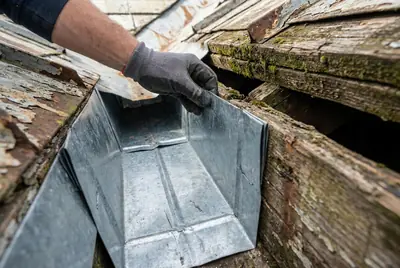
A box gutter does not hang off the roof edge. It is built into the roof itself: a timber trough lined with metal or membrane, running behind a parapet wall or tucked between two roof slopes. Nearly every American home put up before 1950 with a flat front, and plenty of flat-roofed additions since, drains through one.
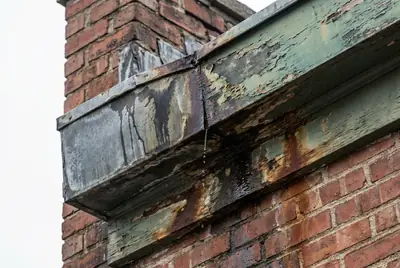
That hidden position is the whole problem. A hanging gutter fails in public, dripping where you can see it. A box gutter fails inward. The trough floor rusts through or a joint opens, and the water takes the shortest path into the house: along a beam, down a wall cavity, out through a ceiling ten feet from the actual hole.
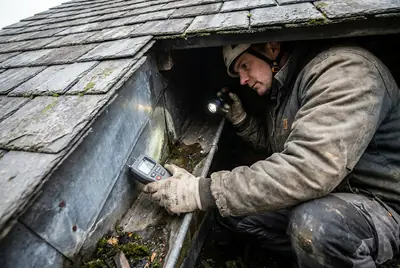
By the time a stain appears, the leak has usually been running for seasons. This is why we open every job with a survey rather than a sales pitch. Someone has to stand in the trough, meter the timber and find out which of the six classic failures is at work before any fix is worth pricing.

The six ways a trough gives up
Every survey checks all six, photographs what it finds and writes down which ones your roof actually has.
Lining options, with their honest lifespans
The survey decides this, not the brochure. When a coat of liquid is the wrong answer we say so, and when it is the right one nobody will talk you into a rebuild.
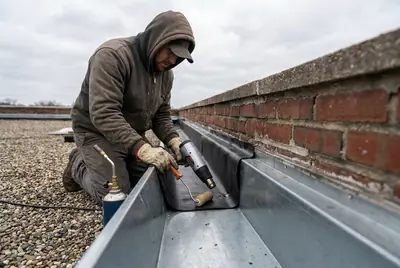
Troughs we have stood in

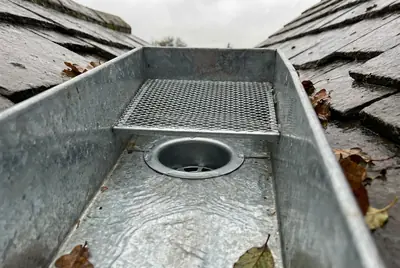
Homes that hide their gutters
Houses with history
Victorians, foursquares and rowhouses hide their gutters behind cornices and crown moldings, exactly where a ladder inspection never looks. The trough is often original, which means a century of patches over the first liner.
We work from the roof, keep the cornice profile intact and match liner details to the age of the house. The neighbors notice fresh paint, not our scaffold.
Flat roofs and additions
Parapet gutters on flat-roofed homes feed internal downpipes, so one blocked outlet can put water through every ceiling below. Porches and long additions add valley troughs that run well out of sight.
We schedule around family life, document every finding for you and your insurer, and can put the trough on a standing maintenance rota so the next blockage never becomes a claim.
Four moves, one dry house
- 1
Call the trough desk
One call to (844) 213-6324: ZIP code, what the gutter is doing and roughly when the home went up. Photos can wait for the survey, and the date is set before you hang up.
- 2
The roof survey
We walk the trough end to end, meter the timber, photograph every junction and lift what needs lifting.
- 3
The report and the quote
One document: what is failing, what can wait, and what each fix costs. You keep it whichever way you decide.
- 4
The repair or the reline
Liner in, outlets flowing, and a hose test before the ladder comes down for the last time.
The price of a dry trough
Length, access and how far the rot has traveled set the final number. The survey settles all three, and hearing the figure commits you to nothing.
Asked from under a stained ceiling
How do I know my house has a box gutter at all?
If the roof meets a parapet wall, if the front of the house is flat with no gutter visible from the sidewalk, or if two roof slopes meet over a wall, water is running through a built-in trough. Homes put up before 1950 nearly always drain this way.
Why is the stain ten feet from where you found the hole?
Because water is a traveler. It leaves the trough at the failure, follows a beam or a wall cavity, and only drops when it runs out of road. Chasing the stain instead of the source is how houses end up with three patches and the same leak.
Can you reline the gutter without touching the rest of the roof?
Usually, yes. The liner sits inside the trough and is independent of the slates, shingles or membrane around it. We tie the new liner into the existing covering at the edges, and the rest of the roof never knows we were there.
Metal or membrane, which liner should I want?
The honest answer is the one that fits your trough, not the one with the best margin. Sound timber and straight runs favor folded metal for its lifespan. Twisting runs, many outlets or a tight budget favor rubber or liquid. The report prices what fits.
How disruptive is the work for the household below?
Less than a leak is. Nearly everything happens at roof level behind edge protection. Life at home carries on, and for occupied houses we sequence noisy cutting outside the hours that hurt.
What if you find the gutter boards are rotten?
Then the report says so, with photographs, and prices the rebuild as its own line. Nobody discovers a doubled invoice halfway through the job. Rot found at survey stage is a plan; rot found mid-reline is an argument, and we prefer plans.
The rooflines around Florida
Zoom in on the flat roofs and parapets; the link ledgers below name every community our surveyors reach from here.
Florida: every county on the ledger
- Box Gutter Repair in Alachua County, FL
- Box Gutter Repair in Baker County, FL
- Box Gutter Repair in Bay County, FL
- Box Gutter Repair in Bradford County, FL
- Box Gutter Repair in Brevard County, FL
- Box Gutter Repair in Broward County, FL
- Box Gutter Repair in Calhoun County, FL
- Box Gutter Repair in Charlotte County, FL
- Box Gutter Repair in Citrus County, FL
- Box Gutter Repair in Clay County, FL
- Box Gutter Repair in Collier County, FL
- Box Gutter Repair in Columbia County, FL
- Box Gutter Repair in DeSoto County, FL
- Box Gutter Repair in Dixie County, FL
- Box Gutter Repair in Duval County, FL
- Box Gutter Repair in Escambia County, FL
- Box Gutter Repair in Flagler County, FL
- Box Gutter Repair in Franklin County, FL
- Box Gutter Repair in Gadsden County, FL
- Box Gutter Repair in Gilchrist County, FL
- Box Gutter Repair in Glades County, FL
- Box Gutter Repair in Gulf County, FL
- Box Gutter Repair in Hamilton County, FL
- Box Gutter Repair in Hardee County, FL
- Box Gutter Repair in Hendry County, FL
- Box Gutter Repair in Hernando County, FL
- Box Gutter Repair in Highlands County, FL
- Box Gutter Repair in Hillsborough County, FL
- Box Gutter Repair in Holmes County, FL
- Box Gutter Repair in Indian River County, FL
The towns that built Florida
- Box Gutter Repair in Jacksonville, FL 878,907 on the census
- Box Gutter Repair in Miami, FL 451,214 on the census
- Box Gutter Repair in Tampa, FL 376,345 on the census
- Box Gutter Repair in Leon, FL 286,272 on the census
- Box Gutter Repair in Orlando, FL 275,690 on the census
- Box Gutter Repair in St. Petersburg, FL 259,041 on the census
- Box Gutter Repair in Eastwood, FL 238,300 on the census
- Box Gutter Repair in Hialeah, FL 237,285 on the census
- Box Gutter Repair in Tallahassee, FL 190,180 on the census
- Box Gutter Repair in Port Saint Lucie, FL 183,762 on the census
- Box Gutter Repair in Fort Lauderdale, FL 178,783 on the census
- Box Gutter Repair in Cape Coral, FL 178,593 on the census
- Box Gutter Repair in Tropical Gulf Acres, FL 173,115 on the census
- Box Gutter Repair in Pembroke Pines, FL 168,260 on the census
- Box Gutter Repair in The Villages, FL 157,000 on the census
- Box Gutter Repair in Hollywood, FL 151,056 on the census
- Box Gutter Repair in Hollywood Beach, FL 146,526 on the census
- Box Gutter Repair in Spring Hill, FL 140,000 on the census
- Box Gutter Repair in Miramar, FL 138,168 on the census
- Box Gutter Repair in Coral Springs, FL 131,151 on the census
- Box Gutter Repair in Gainesville, FL 130,790 on the census
- Box Gutter Repair in Lehigh Acres, FL 119,205 on the census
- Box Gutter Repair in Lake Fern, FL 117,574 on the census
- Box Gutter Repair in Clearwater, FL 114,015 on the census
- Box Gutter Repair in Brandon, FL 113,279 on the census
- Box Gutter Repair in Miami Gardens, FL 112,913 on the census
- Box Gutter Repair in Palm Bay, FL 110,271 on the census
- Box Gutter Repair in Pompano Beach, FL 108,855 on the census
- Box Gutter Repair in West Palm Beach, FL 108,365 on the census
- Box Gutter Repair in Lakeland, FL 105,958 on the census
Also under South skies
- Box Gutter Repair in Alabama
- Box Gutter Repair in Arkansas
- Box Gutter Repair in Delaware
- Box Gutter Repair in Georgia
- Box Gutter Repair in Kentucky
- Box Gutter Repair in Louisiana
- Box Gutter Repair in Maryland
- Box Gutter Repair in Mississippi
- Box Gutter Repair in North Carolina
- Box Gutter Repair in Oklahoma
- Box Gutter Repair in South Carolina
- Box Gutter Repair in Tennessee
- Box Gutter Repair in Texas
- Box Gutter Repair in Virginia
- Box Gutter Repair in Washington, D.C.
- Box Gutter Repair in West Virginia
Somewhere above these streets a trough is quietly rusting.
Call (844) 213-6324