
Box Gutter Repair in the Midwest of the United States
The Midwest raised whole blocks of homes behind parapets. Keeping the gutters behind them dry is what we do all day.
The call costs nothing and commits you to nothing. Any call-out fee for the survey is named when the date is set, and the written report follows the survey.
That tricky hidden channel on your roof can cause real headaches if it's misbehaving. You really do not want water finding its way inside your walls, especially with our wild Midwest weather. Let's dig into why fixing these tucked-away water collectors promptly is super important for your home.
What's the Deal with Those Hidden Water Channels Anyway
You might not even realize your home has one of these specialized roofline drainage systems. Many older homes, especially in our region, feature them because they give the roof edge a cleaner, more streamlined look, hiding the rain management system from plain sight.
However, this discrete design, while aesthetically pleasing, means you cannot easily see if something is going wrong. Therefore, issues can fester unseen for quite a while, leading to bigger, messier problems down the line.
Your Home's Secret Weapon Against Rain and Snow
Every roof needs a way to funnel rainwater away from your foundation and walls. And that is where your integrated water channels come into play, directing all that precipitation safely away.
But this particular kind of trough, being built into the roof structure, catches all the rain and melting snow, protecting your home's siding and foundation from erosion and water damage. This means you avoid costly repairs to your home's lower levels later on.
Why a Leaky Trough is No Laughing Matter
You know, ignoring a leaky internal water channel is kinda like ignoring a check engine light in your car: it might seem okay for a bit, but eventually, you are looking at a much bigger bill. Water damage is sneaky and relentless.
Indeed, a small drip from that concealed roof drainage can quickly turn into a massive headache, eroding fascia boards, rotting rafters, and inviting mold and mildew to set up shop. This can compromise the structural integrity of your home, costing you a fortune in remediation.
Midwest Weather Really Puts Them to the Test
Our climate around here, with its heavy snowfall, ice dams, humid summers, and fierce thunderstorms, is particularly brutal on these systems. Those constant freeze-thaw cycles make materials expand and contract, causing seals to break and seams to split.
Furthermore, falling branches and hail during our intense storms can dent or puncture the metal, creating new pathways for water to escape where it should not. This wear and tear is relentless, demanding robust solutions.
Therefore, a properly maintained and sealed system is absolutely crucial for protecting your investment against the elements here in the Midwest. You want that rainwater going where it belongs, not inside your attic or walls.
Spotting the Sneaky Signs of Trouble
Since you cannot easily see inside your hidden trough system, you need to be a detective to catch problems early. Keep an eye out for telltale clues around your home's exterior and interior.
For instance, mysterious water stains on your ceiling or walls near the roofline are huge red flags. This often indicates water is escaping the channel and seeping into your home, causing visible damage.
Moreover, peeling paint or discolored siding directly below the roof edge strongly suggests water is overflowing or leaking from the trough. This shows the system is failing to direct water properly, harming your home's exterior.
Another major sign is the presence of mildew or algae growth on your exterior walls, especially in areas that are not typically damp. This points to persistent moisture issues that definitely need addressing.
Things to Look Out For
It is important to pay close attention to the small details. You can save yourself a lot of grief by catching these issues before they escalate.
- Stains on exterior walls
- Peeling paint or rotting wood near the roofline
- Sagging or bowing fascia boards
- Water in your basement or crawl space
- A persistent dripping sound during or after rain
What Goes Into Fixing That Integrated Water Channel
Repairing these specialized roofline drainage systems is often more involved than just patching a simple leak. Professionals really get into the nitty-gritty of the system, ensuring everything works as it should.
First, an experienced pro will conduct a thorough inspection, often using specialized tools like cameras to peer inside the hidden channels and pinpoint the exact source of the problem. This lets them accurately diagnose hidden issues.
Then, depending on what they find, they might clean out stubborn clogs, seal up tiny cracks, or even replace entire sections of the damaged trough. This precise work ensures the system is watertight and free-flowing again.
Common Fixes for a Troubled Trough
Many issues can plague your concealed roof drainage, and understanding the typical fixes helps you know what to expect. Each solution aims to restore the system's ability to protect your home.
For example, if the problem is just a minor crack or a separated seam, a professional can often repair it with specialized sealants and patching materials. This restores the system's integrity without needing extensive replacements.
However, if the damage is more extensive, like corroded metal or severely warped sections, a skilled installer might need to cut out and replace those specific parts. This ensures a lasting repair, bringing back the system's full functionality.
Sometimes, the issue is simply a build-up of leaves and debris, creating a dam that causes water to back up and overflow. Therefore, a thorough cleaning can often solve these drainage woes completely.
Why Calling a Pro is Your Best Bet
You might think about tackling a leaky internal water channel yourself, but it is usually a job best left to the folks who do this for a living. Working on roofs can be dangerous, and these hidden systems are particularly tricky.
Plus, a good local pro truly knows the local code and regulations around here, ensuring any repair work meets all necessary standards. This peace of mind is pretty valuable, knowing your repair is done right and safely.
They also have all the right gear and experience to safely access your roof, properly diagnose the problem, and use the correct materials and techniques for a lasting fix. This expertise prevents you from making things worse or risking injury.
What a Good Local Pro Brings to the Table
When you are looking for someone to work on your specialized roofline drainage, you want to make sure you are getting top-notch service. Asking the right questions can make all the difference.
A reputable professional should definitely carry appropriate licensing and insurance. This protects you from any liability if an accident happens on your property, offering you genuine security.
Moreover, they should gladly provide you with a written warranty for their work. This means you have recourse if something goes wrong after the repair, guaranteeing the quality of their service.
You should also ask for references from past clients in the area. This lets you hear firsthand about their experience and the quality of the work performed, giving you confidence in your choice.
| Consideration | Benefit to You |
|---|---|
| Licensed and Insured | Protects your finances and property |
| Written Warranty | Assures quality and provides recourse |
| Local Code Knowledge | Guarantees compliant and safe repairs |
Reap the Rewards of a Healthy Water Management System
Getting your concealed roof drainage system back in tip-top shape offers more than just stopping a leak. It really protects your entire home from potential havoc, safeguarding your biggest investment.
A properly functioning system keeps water away from your foundation, preventing costly structural damage and basement flooding. This saves you huge amounts of money and stress in the long run.
Furthermore, by preventing water from infiltrating your walls and attic, you are essentially shutting the door on mold and mildew growth. This maintains a healthier indoor environment for your family.
And that means your home's exterior components, like fascia boards and siding, will last much longer, looking better and needing fewer repairs over time. This preserves your home's curb appeal and value.
So, a little proactive maintenance and timely repair now can save you a mountain of headaches and expenses later. You are truly investing in your home's longevity and your own peace of mind.
Ready to Get Your Hidden Water Channels Fixed
You have seen the signs, you know the risks, and you understand the benefits of a well-maintained specialized roofline drainage system. Now is the perfect time to address any issues before they escalate.
Because delaying repairs only leads to more significant damage and higher costs, acting quickly protects your home from the unpredictable Midwest climate. It is always better to tackle these things sooner rather than later.
Therefore, if you suspect your integrated water channels are not doing their job, you should explore your options. You can easily get free quotes from local professionals who know these systems inside and out.
This simple step lets you compare services and find the right expert for your specific needs, making the whole process straightforward and stress-free. Take charge of your home's protection today.
What a box gutter is, and why yours leaks
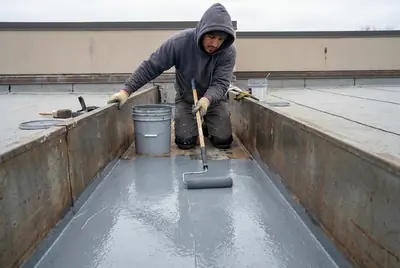
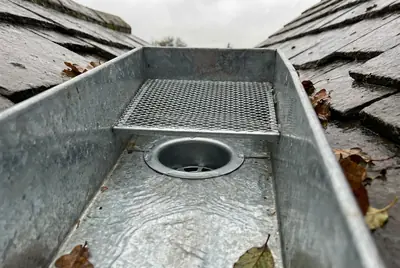
A box gutter does not hang off the roof edge. It is built into the roof itself: a timber trough lined with metal or membrane, running behind a parapet wall or tucked between two roof slopes. Nearly every American home put up before 1950 with a flat front, and plenty of flat-roofed additions since, drains through one.
That hidden position is the whole problem. A hanging gutter fails in public, dripping where you can see it. A box gutter fails inward. The trough floor rusts through or a joint opens, and the water takes the shortest path into the house: along a beam, down a wall cavity, out through a ceiling ten feet from the actual hole.
By the time a stain appears, the leak has usually been running for seasons. This is why we open every job with a survey rather than a sales pitch. Someone has to stand in the trough, meter the timber and find out which of the six classic failures is at work before any fix is worth pricing.
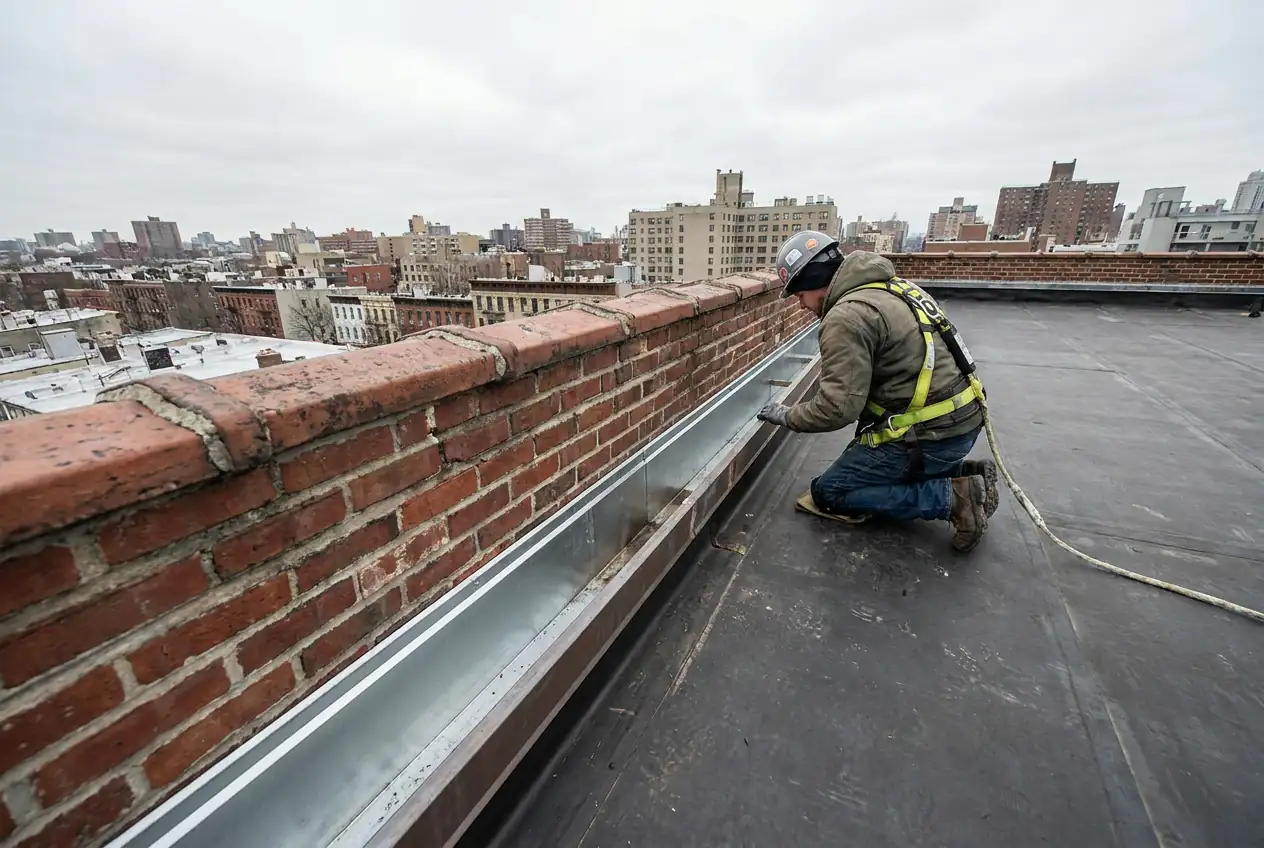
The six ways a trough gives up
Every survey checks all six, photographs what it finds and writes down which ones your roof actually has.
Lining options, with their honest lifespans
The survey decides this, not the brochure. When a coat of liquid is the wrong answer we say so, and when it is the right one nobody will talk you into a rebuild.
Troughs we have stood in

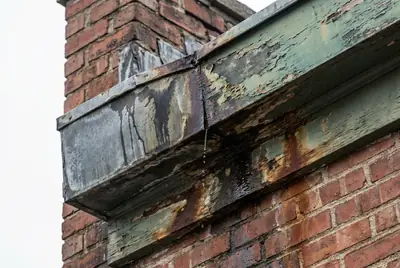
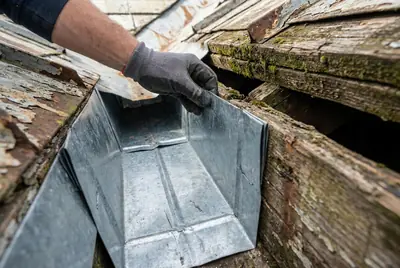
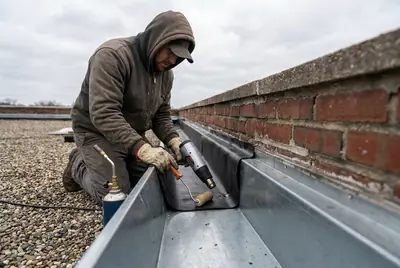
Homes that hide their gutters
Houses with history
Victorians, foursquares and rowhouses hide their gutters behind cornices and crown moldings, exactly where a ladder inspection never looks. The trough is often original, which means a century of patches over the first liner.
We work from the roof, keep the cornice profile intact and match liner details to the age of the house. The neighbors notice fresh paint, not our scaffold.
Flat roofs and additions
Parapet gutters on flat-roofed homes feed internal downpipes, so one blocked outlet can put water through every ceiling below. Porches and long additions add valley troughs that run well out of sight.
We schedule around family life, document every finding for you and your insurer, and can put the trough on a standing maintenance rota so the next blockage never becomes a claim.
Four moves, one dry house
- 1
Call the trough desk
One call to (844) 213-6324: ZIP code, what the gutter is doing and roughly when the home went up. Photos can wait for the survey, and the date is set before you hang up.
- 2
The roof survey
We walk the trough end to end, meter the timber, photograph every junction and lift what needs lifting.
- 3
The report and the quote
One document: what is failing, what can wait, and what each fix costs. You keep it whichever way you decide.
- 4
The repair or the reline
Liner in, outlets flowing, and a hose test before the ladder comes down for the last time.
The price of a dry trough
Length, access and how far the rot has traveled set the final number. The survey settles all three, and hearing the figure commits you to nothing.
Asked from under a stained ceiling
How do I know my house has a box gutter at all?
If the roof meets a parapet wall, if the front of the house is flat with no gutter visible from the sidewalk, or if two roof slopes meet over a wall, water is running through a built-in trough. Homes put up before 1950 nearly always drain this way.
Why is the stain ten feet from where you found the hole?
Because water is a traveler. It leaves the trough at the failure, follows a beam or a wall cavity, and only drops when it runs out of road. Chasing the stain instead of the source is how houses end up with three patches and the same leak.
Can you reline the gutter without touching the rest of the roof?
Usually, yes. The liner sits inside the trough and is independent of the slates, shingles or membrane around it. We tie the new liner into the existing covering at the edges, and the rest of the roof never knows we were there.
Metal or membrane, which liner should I want?
The honest answer is the one that fits your trough, not the one with the best margin. Sound timber and straight runs favor folded metal for its lifespan. Twisting runs, many outlets or a tight budget favor rubber or liquid. The report prices what fits.
How disruptive is the work for the household below?
Less than a leak is. Nearly everything happens at roof level behind edge protection. Life at home carries on, and for occupied houses we sequence noisy cutting outside the hours that hurt.
What if you find the gutter boards are rotten?
Then the report says so, with photographs, and prices the rebuild as its own line. Nobody discovers a doubled invoice halfway through the job. Rot found at survey stage is a plan; rot found mid-reline is an argument, and we prefer plans.
The rooflines around Midwest
Zoom in on the flat roofs and parapets; the link ledgers below name every community our surveyors reach from here.
Each state of the Midwest, on our rounds
- Box Gutter Repair in Illinois
- Box Gutter Repair in Indiana
- Box Gutter Repair in Iowa
- Box Gutter Repair in Kansas
- Box Gutter Repair in Michigan
- Box Gutter Repair in Minnesota
- Box Gutter Repair in Missouri
- Box Gutter Repair in Nebraska
- Box Gutter Repair in North Dakota
- Box Gutter Repair in Ohio
- Box Gutter Repair in South Dakota
- Box Gutter Repair in Wisconsin
Cities that raised the Midwest
- Box Gutter Repair in Chicago, IL 2,718,555 on the census
- Box Gutter Repair in Chicago, WI 2,695,598 on the census
- Box Gutter Repair in Columbus, OH 867,628 on the census
- Box Gutter Repair in Indianapolis, IN 857,637 on the census
- Box Gutter Repair in Detroit, MI 677,155 on the census
- Box Gutter Repair in Milwaukee, WI 596,886 on the census
- Box Gutter Repair in Kansas City, MO 481,417 on the census
- Box Gutter Repair in Omaha, NE 465,112 on the census
- Box Gutter Repair in Minneapolis, MN 416,021 on the census
- Box Gutter Repair in Poznan, OH 396,815 on the census
- Box Gutter Repair in Wichita, KS 389,563 on the census
- Box Gutter Repair in Cleveland, OH 387,398 on the census
- Box Gutter Repair in St. Louis, MO 311,273 on the census
- Box Gutter Repair in Saint Paul, MN 302,760 on the census
- Box Gutter Repair in Cincinnati, OH 300,357 on the census
- Box Gutter Repair in Lincoln, NE 280,849 on the census
- Box Gutter Repair in Toledo, OH 278,193 on the census
- Box Gutter Repair in Fort Wayne, IN 264,052 on the census
- Box Gutter Repair in Havelock, NE 258,379 on the census
- Box Gutter Repair in West Lincoln, NE 258,379 on the census
- Box Gutter Repair in Rolling Hills, IN 253,691 on the census
- Box Gutter Repair in Brierwood Hills, IN 253,691 on the census
- Box Gutter Repair in Brookside Estates, IN 253,691 on the census
- Box Gutter Repair in Concordia Gardens, IN 253,691 on the census
- Box Gutter Repair in Country Club Gardens, IN 253,691 on the census
- Box Gutter Repair in Covington Dells, IN 253,691 on the census
- Box Gutter Repair in Crestwood, IN 253,691 on the census
- Box Gutter Repair in Ellisville, IN 253,691 on the census
- Box Gutter Repair in Golden Acres, IN 253,691 on the census
- Box Gutter Repair in Hacienda Village, IN 253,691 on the census
- Box Gutter Repair in Liberty Hills, IN 253,691 on the census
- Box Gutter Repair in Ludwig Park, IN 253,691 on the census
- Box Gutter Repair in Manor Woods, IN 253,691 on the census
- Box Gutter Repair in Maplewood Park, IN 253,691 on the census
- Box Gutter Repair in Nine Mile, IN 253,691 on the census
- Box Gutter Repair in Parkway Hills, IN 253,691 on the census
- Box Gutter Repair in Royal Oaks, IN 253,691 on the census
- Box Gutter Repair in Royville, IN 253,691 on the census
- Box Gutter Repair in Sunnybrook Acres, IN 253,691 on the census
- Box Gutter Repair in Sunnymeadow, IN 253,691 on the census
Somewhere above these streets a trough is quietly rusting.
Call (844) 213-6324